

Emergency prepping for a new puppy or kitten can be fun!

Make a Plan
Bringing a new furry family member into your home is always a joyful experience. The scents of puppies and kittens, the playful moments, and all the cuddles make it special.
Welcome Home:
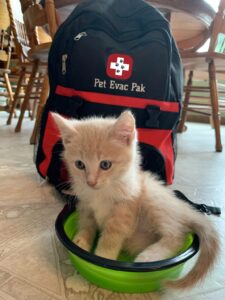 Before you welcomed your new pet, you likely prepared by purchasing toys, food, bowls, and even a crate or bed for them to sleep in. Now that they are home, it’s essential to schedule their first vet visit for vaccinations and microchipping because their safety should always be your top priority. You may have even considered pet insurance to cover any unexpected medical expenses.
One crucial aspect that many pet owners overlook is having an emergency plan and an emergency go-bag ready. Whether you need to shelter in place or evacuate due to unforeseen circumstances, it’s important to have a plan in advance.
How many days?
When planning for your new puppy or kitten, consider how large they will grow as adults. You should have enough emergency supplies to sustain them for at least 72 hours in the event of an emergency. FEMA recommends this duration because it can take up to 72 hours for shelters to be established. Generally, you’ll know within that timeframe whether you can return home or need to make longer-term arrangements.
Planning for your new arrival:
- Have a buddy system with a close neighbour or friend who can grab your pet if you’re not home. Make sure they know where their go-bag is kept.
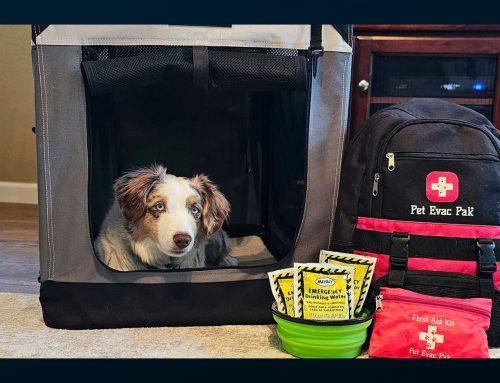
- Prepare a go-bag for your pet. Each Pet Evac Pak includes 72 hours’ worth of emergency dog or cat food, suitable for all life stages, and water tailored to your pet’s size. The food and water both come with a shelf life of five years. Keep in mind that puppies and kittens often require different diets. If you feed kibble and want to maintain consistency during an emergency, consider purchasing a small bag specifically for your kit. Avoid opening or repackaging it, as kibble can spoil within three weeks of being opened and exposed to air. You can use this kibble when transitioning them to an adult diet.
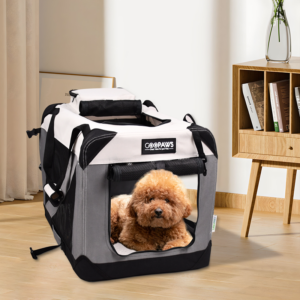
Crate Training
- Add 5 days’ worth of their medication and their shot records to their kit.
- Make a list of important phone numbers, veterinarians, local animal control (they will know where shelters are being set up), pet-friendly hotels along your route and boarding facilities.
- Consider adding an age-appropriate toy to their emergency kit to assist with teething and provide mental stimulation.
- Engage in socialising, crate training, and acclimating them to car rides, as this will help ensure their comfort during future emergency evacuations or travel.
- You may need to start with smaller bowls for their food and water, transitioning to larger ones as they grow.
We wish you the best of luck with your new family member, and remember, we are here to help you keep your pet safe!. Make sure to follow us on all our social media channels for the latest tips and tricks. facebook@petevacpak.com Instagram@petevacpak.com and TikTok@petevacpak.com



Great reminder!
Thank you for the comments!
I enjoyed reading this content.
We are glad you enjoyed the content of this article.
Thanks for sharing this useful information.
Excellent web site you have got here.. It’s
difficult to find quality writing like yours nowadays.
I seriously appreciate individuals like you!
Take care!!
Thank you so much!